 |
Intro 1 / Show House Details 2 / Tour Tips 3 / Shape 4 / Materials 5 / Structure 6 / Color 7 / Texture 8 / Size |
 Hard to define yet essential to excellent
design, texture is sublime. This is where designers have to really think
and methodically evaluate their material choices for a space. By weaving
together multiple tactile and aesthetic choices, a room gains dimension
and depth. The dense layering used by good designers gives a space that
certain completeness. Smooth, sandy, plush, spiny, soft, or grainy - textures
subtly define the lighting of a room. Contrasting and combining textures
can diffuse or reflect light to create the desired character and scale.
Hard to define yet essential to excellent
design, texture is sublime. This is where designers have to really think
and methodically evaluate their material choices for a space. By weaving
together multiple tactile and aesthetic choices, a room gains dimension
and depth. The dense layering used by good designers gives a space that
certain completeness. Smooth, sandy, plush, spiny, soft, or grainy - textures
subtly define the lighting of a room. Contrasting and combining textures
can diffuse or reflect light to create the desired character and scale.
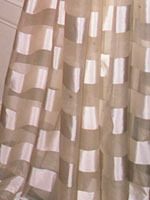
The weight, nap, weave, and pattern of fabrics vary widely. By using, for example, a lightweight, sheer appliqué on a window treatment, more light is emitted, and the character of the room becomes livelier and less serious.
 Softer, heavier materials connote one thing
and hard, shinny materials another. Observe how the use of texture relates
to the overall scheme. There are no steadfast rules about the combinations
of texture, but a sense of order usually is necessary for a harmonious
result.
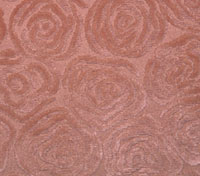
Softer, heavier materials connote one thing
and hard, shinny materials another. Observe how the use of texture relates
to the overall scheme. There are no steadfast rules about the combinations
of texture, but a sense of order usually is necessary for a harmonious
result.
Look for the texture choices that really add dimension and depth to the space.
Previous / Intro /
1 / 2 / 3 /
4 / 5 / 6 / 7 /
8 / Next
Subscribe to our free and extremely informational newsletter. We would love to have your comments at: mail@designintuit.com
Welcome / What We're About / Focus on Showcases / Marco Polo's Quest / Michelangelo's Den / Great Sites & Sources / Reading / Tiles & Textures / Tools & Terms / Contact Us
This site design and text © DesignIntuit, 2001