 |
Intro 1 / Show House Details 2 / Tour Tips 3 / Shape 4 / Materials 5 / Structure 6 / Color 7 / Texture 8 / Size |
For this issue we will focus on the structure of the room - the architectural context. This is a great way to apply the lessons of what can and can't be altered, and how structure relates to balance.
In most show houses, structural changes are not allowed. So we get to see how really talented designers live with existing structures and create spectacular results. This is where designers really use their knowledge about creating a design solution. By analyzing the architectural context and synthesizing the goals, and evaluating the possibilities, a design starts to unfold.
Look at
the structure and mentally subtract 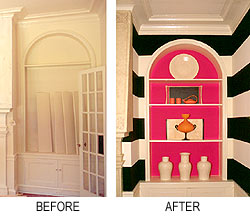 the furnishings
from the room. Look at the shell as the designer might. Look at the room
size and shape, window and door placement, and ceiling heights first.
Next consider the proposed function of the room. Then see how the masterful
designer created the finished product. See what you can tell about the
transformation of the rooms in the show house. Very imaginative ideas
materialize when a design challenge is approached systematically. Hats
off to all those designers who can triumph!
the furnishings
from the room. Look at the shell as the designer might. Look at the room
size and shape, window and door placement, and ceiling heights first.
Next consider the proposed function of the room. Then see how the masterful
designer created the finished product. See what you can tell about the
transformation of the rooms in the show house. Very imaginative ideas
materialize when a design challenge is approached systematically. Hats
off to all those designers who can triumph!
We will discuss this with examples in Marco Polo's Quest and show how designers look first at what exists, next what is desired, and then how to make it all possible.
Previous / Intro /
1 / 2 / 3 /
4 / 5 / 6 /
7 / 8 / Next
Subscribe to our free and extremely informational newsletter. We would love to have your comments at: mail@designintuit.com
Welcome / What We're About / Focus on Showcases / Marco Polo's Quest / Michelangelo's Den / Great Sites & Sources / Reading / Tiles & Textures / Tools & Terms / Contact Us
This site design and text © DesignIntuit, 2001