 |
Intro 1 / Show House Details 2 / Tour Tips 3 / Shape 4 / Materials 5 / Structure 6 / Color 7 / Texture 8 / Size |
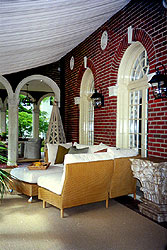 It is very interesting to observe how size affects our
experience of a space. Relative size is important for a perceived sense
of proportion and balance. Proportion is a classical element of design
and a key aesthetic. The artful combinations of large and small, medium
and minute are used to draw attention to or away from aspects of a space.
The scale of all of the elements must be considered, in relation to each
other and the room size. Also, the mass of the various objects in a room
affects the sense of proportion. The volume of furnishings is an important
aspect of size. For example, the lack of furnishings in a room creates
a distinctive minimal character.
It is very interesting to observe how size affects our
experience of a space. Relative size is important for a perceived sense
of proportion and balance. Proportion is a classical element of design
and a key aesthetic. The artful combinations of large and small, medium
and minute are used to draw attention to or away from aspects of a space.
The scale of all of the elements must be considered, in relation to each
other and the room size. Also, the mass of the various objects in a room
affects the sense of proportion. The volume of furnishings is an important
aspect of size. For example, the lack of furnishings in a room creates
a distinctive minimal character.
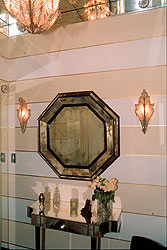 The personality of a room changes greatly
as objects are added or subtracted. Look for the proportionate use of
furnishings relative to the size of the room. Keenly observe how relative
size and proportion provide balance and harmony. Think of ways to create
a sense of greater or lesser size where needed through the use of elements
that accent the feeling of size that you are looking for. A few examples
are things like mirrors, striped walls, smaller or larger fixtures, or
furniture that compliments or contrasts the size of the room.
The personality of a room changes greatly
as objects are added or subtracted. Look for the proportionate use of
furnishings relative to the size of the room. Keenly observe how relative
size and proportion provide balance and harmony. Think of ways to create
a sense of greater or lesser size where needed through the use of elements
that accent the feeling of size that you are looking for. A few examples
are things like mirrors, striped walls, smaller or larger fixtures, or
furniture that compliments or contrasts the size of the room.
Observe trends of volume and mass throughout the show house. Is there still a trend for the minimalist approach, for example? What does the lack in volume of furnishings do to the character of a space? Think about which amount of size fits your lifestyle, too.
Previous / Intro /
1 / 2 / 3 /
4 / 5 / 6 / 7 / 8
Subscribe to our free and extremely informational newsletter.
We would love to have your comments at: mail@designintuit.com
Welcome / What We're About / Focus on Showcases / Marco Polo's Quest / Michelangelo's Den / Great Sites & Sources / Reading / Tiles & Textures / Tools & Terms / Contact Us
This site design and text © DesignIntuit, 2005