 |
Intro 1 / Show House Details 2 / Tour Tips 3 / Shape 4 / Materials 5 / Structure 6 / Color 7 / Texture 8 / Size |
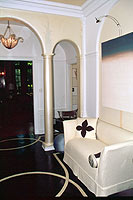 Look first at the
shape of the space or individual room. It is critical to consider the
use or functionality of the space and diagram a workable spatial plan.
With the right spatial considerations, design makes sense. Form follows
function.
Look first at the
shape of the space or individual room. It is critical to consider the
use or functionality of the space and diagram a workable spatial plan.
With the right spatial considerations, design makes sense. Form follows
function.
Good designers will consider the use, function, and the traffic patterns of a room. From that evaluation, floor plans are used to diagram possible furnishing choices. If beautiful furnishings are put into a room without consideration for the lifestyle of the occupant, the room will never be completely comfortable or functional. For example, if a space is being designed as a reading room, the space should be allocated with a comfortable chair, good light, with easy access to book-shelves and away from "traffic".
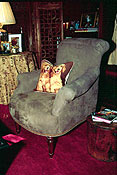 View the shapes
of the furnishings as well. Look at not only the shapes of the furniture
but also how they fill the rooms. (Link this with size to get
an overall feel for the spatial considerations).
View the shapes
of the furnishings as well. Look at not only the shapes of the furniture
but also how they fill the rooms. (Link this with size to get
an overall feel for the spatial considerations).
Understanding spatial planning will lend great success to your overall interior designs. Even if you are not redecorating your house, you can really enhance your living space by studying spatial planning and learning to rearrange your furnishings to "fit" your life.
/ Intro / 1 / 2 / 3 / 4 / 5 / 6 / 7 / 8 / NextSubscribe to our free and extremely informational newsletter. We would love to have your comments at: mail@designintuit.com
Welcome / What We're About / Focus on Showcases / Marco Polo's Quest / Michelangelo's Den / Great Sites & Sources / Reading / Tiles & Textures / Tools & Terms / Contact Us
This site design and text © DesignIntuit, 2001