 |
Intro 1 / Show House Details 2 / Tour Tips 3 / Shape 4 / Materials 5 / Structure 6 / Color 7 / Texture 8 / Size |
From soft to hard surfaces, the successful interplay of materials is essential to good design. Material choices are aesthetic, functional, and value-driven. Again, a good designer considers the intention of the room, and that understanding is key to the material choices.
In show
houses, designers tend to use more extravagant materials than the choices
for their real clients, because this is a showcase and "the client"
is fictitious. Similar to clothing designers who show way-out designs
on fashion runways, a show house is often a trend setting, edgy display
of interior design fashion. But look closely at the material choices.
You will still find harmony in an over-the-top room setting. From ceiling
to floor, almost every inch of the room is addressed. 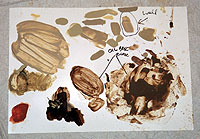 (For example, look at some of the ceilings
for brilliant treatments that we non-designers often overlook.)
(For example, look at some of the ceilings
for brilliant treatments that we non-designers often overlook.)
Look at some of the materials used:
Paint-Designers consider the finish, sheen, color, texture, and pattern. After visiting a show house, you will never look at paint the same way. The creativity with this material is an artform.
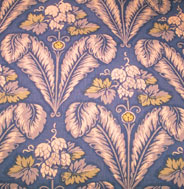 Fabric-From upholstery
to window treatments to accessories, fine fabrics are combined
and layered. The fabric choices are functional and dramatic at
the same time. You will see new trends. Attention to detail is
the completing touch designers know so well. For example, notice
the piping or lining used. Look at how the light of the room
enhances the fabric choices. This is a great education.
Fabric-From upholstery
to window treatments to accessories, fine fabrics are combined
and layered. The fabric choices are functional and dramatic at
the same time. You will see new trends. Attention to detail is
the completing touch designers know so well. For example, notice
the piping or lining used. Look at how the light of the room
enhances the fabric choices. This is a great education.
Wood-The
furniture choices are often the centerpieces of the rooms. Look
at the style, structure, and wood used. Quality will be the most
noticeable common denominator. A good designer will advocate
spending more on "hard" goods because they make a statement
and they are more durable. Fruitwoods and other exotic woods
are often showcased. They are lovely.
Additionally, look for the use of wood for crown moldings, 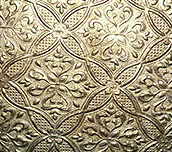 baseboards, doorframes, wainscotting,
ceiling ornaments, etc. These rich details give a room a real
presence.
baseboards, doorframes, wainscotting,
ceiling ornaments, etc. These rich details give a room a real
presence.
Metal- From furniture to light fixtures to objets d'art, metals have a more spatial lightness than wood. Varying types, textures, and finishes provides alternatives to other hard surfaces.
Carpets- This is where
a designer really uses their knowledge about creating a design solution.
By analyzing the architectural context, synthesizing the goals, and evaluating
the possibilities, a design starts to unfold. Not only the types of rugs
or carpets, but also the placement is 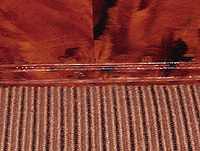 interesting
to see. A rug can contain a space and designate its use and enhance comfort.
Good rugs are pieces of art and are treated as such by good designers.
interesting
to see. A rug can contain a space and designate its use and enhance comfort.
Good rugs are pieces of art and are treated as such by good designers.
Again, function is very important when considering flooring.
The pile, pattern and colors can often be seen subtlety in echoes of other materials. Over the last decade carpet companies have been producing thousands of wonderful choices.
Previous / Intro /
1 / 2 / 3 / 4 /
5 / 6 /
7 / 8 / Next
Subscribe to our free and extremely informational newsletter. We would love to have your comments at: mail@designintuit.com
Welcome / What We're About / Focus on Showcases / Marco Polo's Quest / Michelangelo's Den / Great Sites & Sources / Reading / Tiles & Textures / Tools & Terms / Contact Us
This site design and text © DesignIntuit, 2001