| Application
to the Design: Analyze Synthesize Evaluate |
1 / Design Basics 2 / The Whole Interior Environment 3 / Application to the Design 4 / Environment Worksheet |
The next section (4 / Environment Worksheet) has been included to answer the previous questions for your own environments. Here are a few things to think about as you work and after you've completed the worksheet:
BEGIN THE first stage of your Design Process-ANALYZE YOUR SPACE
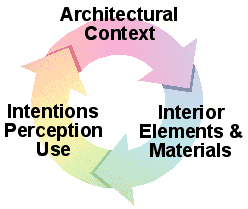 What exists?
In an objective overview, write down everything. Start with the
architectural space and draw a floor plan. Attach a description
of elements, current perception, function, and use. Collect this
data.
What exists?
In an objective overview, write down everything. Start with the
architectural space and draw a floor plan. Attach a description
of elements, current perception, function, and use. Collect this
data.
What can be changed? Now you need to establish your budget. Be realistic. Back into this if needed, but planning a budget and sticking to it is a critical element of a project.
Next make a timeline. When can you start, when would you like to complete the project? How much time can you allocate during that time span? Who else is involved and what are the schedule requirements? Remember broad strokes right now. If you think you will need to hire contractors, plan an extra 2 months due to the demands on their schedules (this is a conservative estimate). What are your intentions? Are you painting and re-tiling or making structural changes? Are you considering adding plumbing and moving walls?
What
are the possibilities?
Start your imagination. Your answers to what exists and what
can be changed will form your choices and affect the outcome.
As you learn more about decorative styles, architectural styles,
color theory, material choices and budgeting, this answer will
become apparent. The possibilities are endless and discovery
of the solutions is astounding!
In the next issue we will focus on synthesizing the information and learning how to evaluate possible outcomes.
Previous / 1 / 2 / 3 / 4 / Next
Go to Focus on Annapolis for a more in depth look at how art, history, nature and tradition influence design.
Go to Tiles and Textures for today's resources that provide these materials and elements.
Subscribe to our free and extremely informational newsletter. We would love to have your comments at: mail@designintuit.com
Welcome / What We're About / Focus on Annapolis / Marco Polo's Quest / Michelangelo's Den / Great Sites & Sources / Reading / Tiles & Textures / Tools & Terms / Contact Us
This site design and text © DesignIntuit, 2001